Fur Structure and Its Role in Heat Retention


Double-Layer Hair
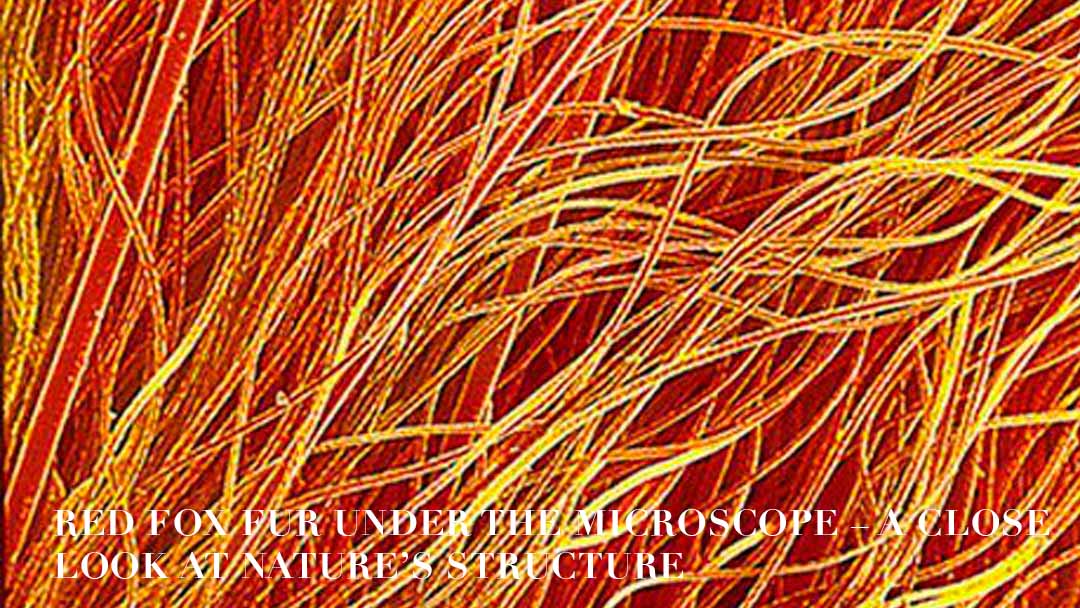
Natural fur consists of two main types of hair—guard hairs and underfur. Guard hairs are longer and more rigid, forming the top layer, while the underfur is a dense layer of short, soft hairs at the base of the pelt. This two-layer system is characteristic of foxes, beavers, and sables alike. The guard hairs serve as a protective barrier, while the underfur traps air pockets. For example, a fox’s long guard hairs work like a “raincoat,” shedding water and snow to keep the underfur dry. Beavers have guard hairs of around 5–6 cm, combined with an extremely dense underfur of about 2–3 cm, allowing them to retain a layer of air even underwater. Sable fur is exceptionally dense and soft: its silky guard hairs and thick underfur deliver outstanding insulation.
Hair Density
A key factor in heat retention is the sheer number of hairs per unit area, which determines how much air can be captured. Furbearing animals typically have extremely high hair density. For instance, beavers can boast from 12,000 to 23,000 hairs per square centimeter, creating a continuous “air mattress” effect in the coat. Arctic foxes can reach about 20,000 hairs per cm², which helps them survive in some of Earth’s most frigid environments. Sable fur can climb to around 40,000 hairs per square inch—about 6,000–7,000 per cm²—in its densest areas. In contrast, humans have roughly 140–220 hairs/cm² on the scalp. This extraordinary density traps a great deal of still air, an efficient insulator. Each keratin hair itself is a poor heat conductor, so the primary insulation derives from the pockets of air between the hairs. With a thicker underfur, convection is minimized and heat loss drops significantly.
Hollow Fibers
The internal structure of each hair also affects thermal insulation. During winter, many animals produce guard hairs with a well-developed medulla, or core, containing air-filled chambers. Certain northern deer and moose have hollow guard hairs, reducing both weight and heat conductivity. Research indicates that Arctic creatures—like stoats and mountain hares—develop a winter coat with larger medullas and more internal air cells than their summer coat. In general, hollow or porous hairs excel at retaining heat by acting like tiny air tubes. While fox and sable guard hairs may not be fully hollow, they still often have a distinct medulla that further enhances warmth. Recent findings highlight that these air-filled fibers contribute to the superior insulation of fur, helping it trap warm air inside.
From the microscopic makeup of each strand to the overall two-layer arrangement, fur’s structure directly dictates how effectively it retains body heat. Next time you see a luxurious fox, beaver, or sable coat, remember that the key lies in those carefully evolved fibers. Have questions or personal experiences with fur insulation? We’d love to hear from you—join the discussion below!